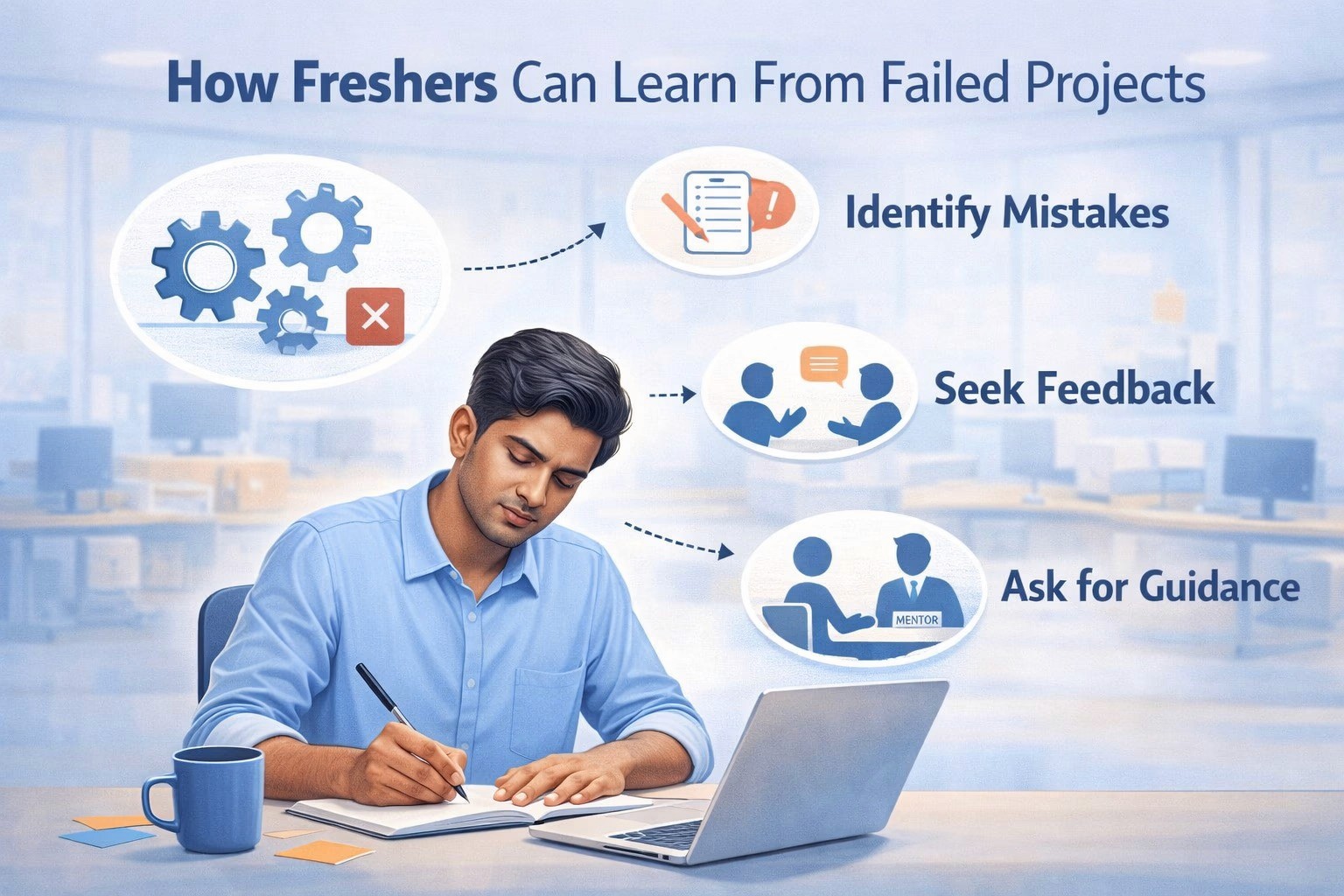
How Lack of Practical Exposure Impacts Fresher Confidence
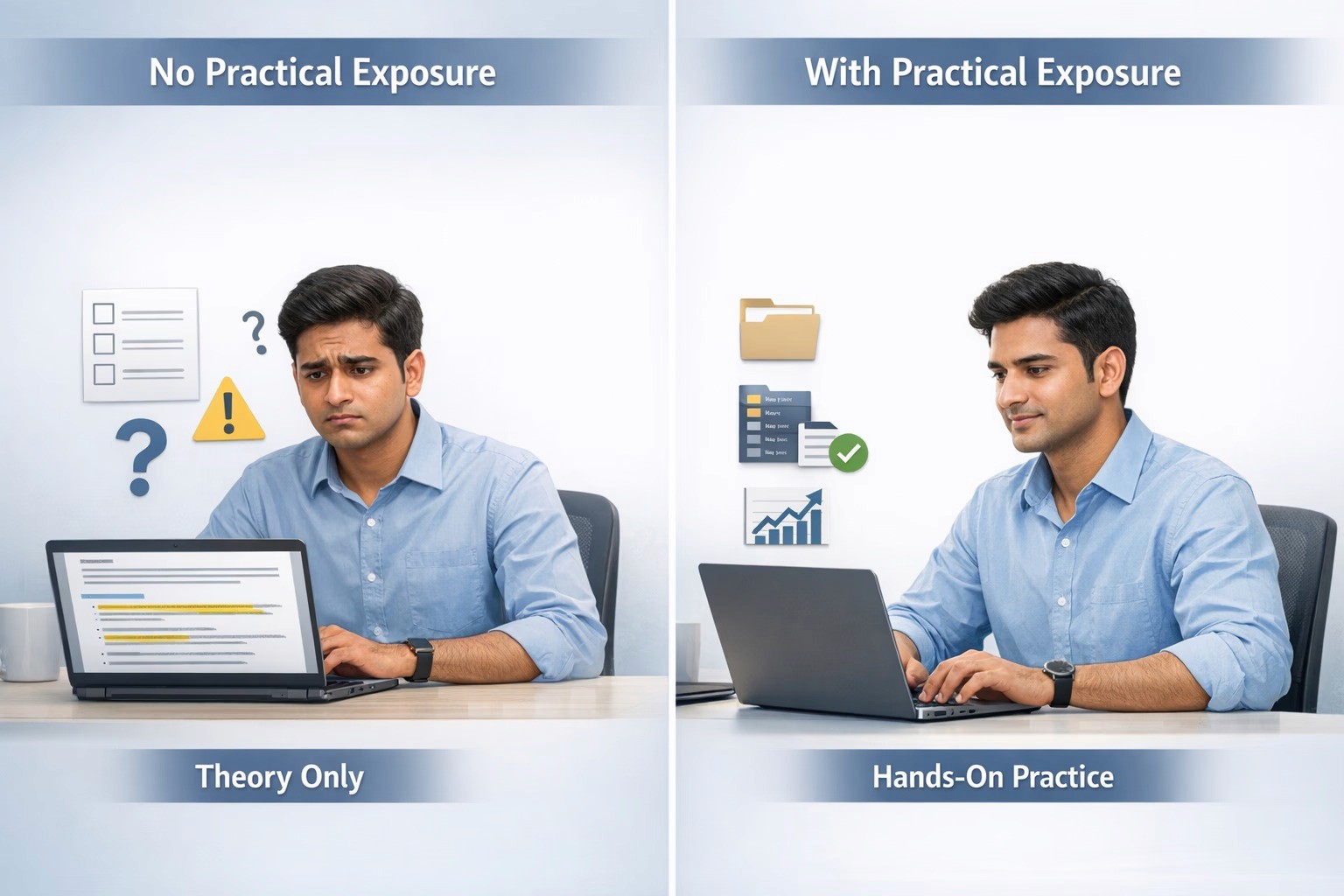
How Lack of Practical Exposure Impacts Fresher Confidence
Most freshers feel nervous in interviews not because questions are difficult, but because they have never used their knowledge in real situations.
Watching tutorials, memorising concepts, and clearing MCQs can make freshers feel ready. But real confidence appears only when knowledge is used, not stored. Interviews don’t reduce confidence—they reveal what hasn’t been practiced yet.
When a fresher struggles to answer “How did you use this in a project?”, it’s not failure. It’s simply a sign that learning hasn’t crossed the bridge from theory to experience. The moment you start applying concepts in real tasks, confidence naturally follows.
Practice turns preparation into proof.
This is not bad luck. It is a predictable outcome of learning without application.
In the workplace, problems are unclear, requirements change, and mistakes are common. Freshers without exposure struggle not due to lack of intelligence, but because they have never worked in uncertainty.

Confidence cannot be learned from slides. It is earned by doing uncomfortable, imperfect, real work.
Until freshers practice in real-world conditions, nervousness is not only normal—it is expected.
Theory Creates Knowledge, Practice Creates Belief
Freshers who study only from notes, videos, or MCQs may understand what something is—but not how it behaves in real work. When you’ve never debugged a failing API, handled a messy database, or fixed someone else’s code, your understanding stays fragile.
When an interviewer asks, “How would you handle this in a project?”, many freshers pause. It’s not because they don’t understand the concept—it’s because they haven’t had the chance to apply it yet. With practice, this hesitation disappears.
Interviews Expose the Gap Instantly
Interviews are designed to test application, not memory. A fresher without hands-on practice often:
Hesitates before answering
Overthinks basic questions
Struggles to explain past work clearly
Doubts their own answers even when correct
This hesitation is picked up immediately. Confidence drops further, and a negative loop starts—I’m not ready yet.
Classroom Learning Feels Structured. Real Work Isn’t.
In college or short-term courses, everything is linear: syllabus → topic → exam. Real projects are messy. Requirements change. Bugs appear unexpectedly. Documentation is incomplete.
Without exposure to this reality, freshers feel overwhelmed when faced with open-ended tasks. This isn’t a skill issue—it’s an exposure issue.
Lack of Practice Affects Communication Too
Confidence isn’t just about coding. It’s also about explaining:
Why you chose a solution
What went wrong and how you fixed it
What you would improve next time
Freshers without project experience often answer vaguely because they don’t have real stories to share. This makes them sound unsure—even if they’ve studied well.
Why This Matters Early in a Career
Low confidence delays growth. Freshers may:
Avoid asking questions
Stay silent in team discussions
Take longer to complete tasks
Depend excessively on instructions
Over time, this impacts performance reviews and learning speed.
What Actually Builds Confidence
Confidence comes from doing small real things repeatedly:
Building mini-projects, not just watching tutorials
Breaking and fixing code
Explaining your work to others
Facing errors and resolving them
Each practical win—no matter how small—creates evidence in your mind: I can handle this.
The Real Takeaway
Freshers don’t lack talent however they lack exposure to uncertainty. Practical experience teaches you that confusion is normal, mistakes are fixable, and learning happens while doing—not before.
Confidence doesn’t come from finishing a course but it comes from surviving real problems—and solving them.
Join WhatsApp Groups for Updates
Group 1: CLICK HERE> https://chat.whatsapp.com/KAXuSLpag96DcdMDsphFrO
📢 Don’t forget to forward this message to your friends and help them kick-start their careers