The Difference Between Being Trained and Being Employable
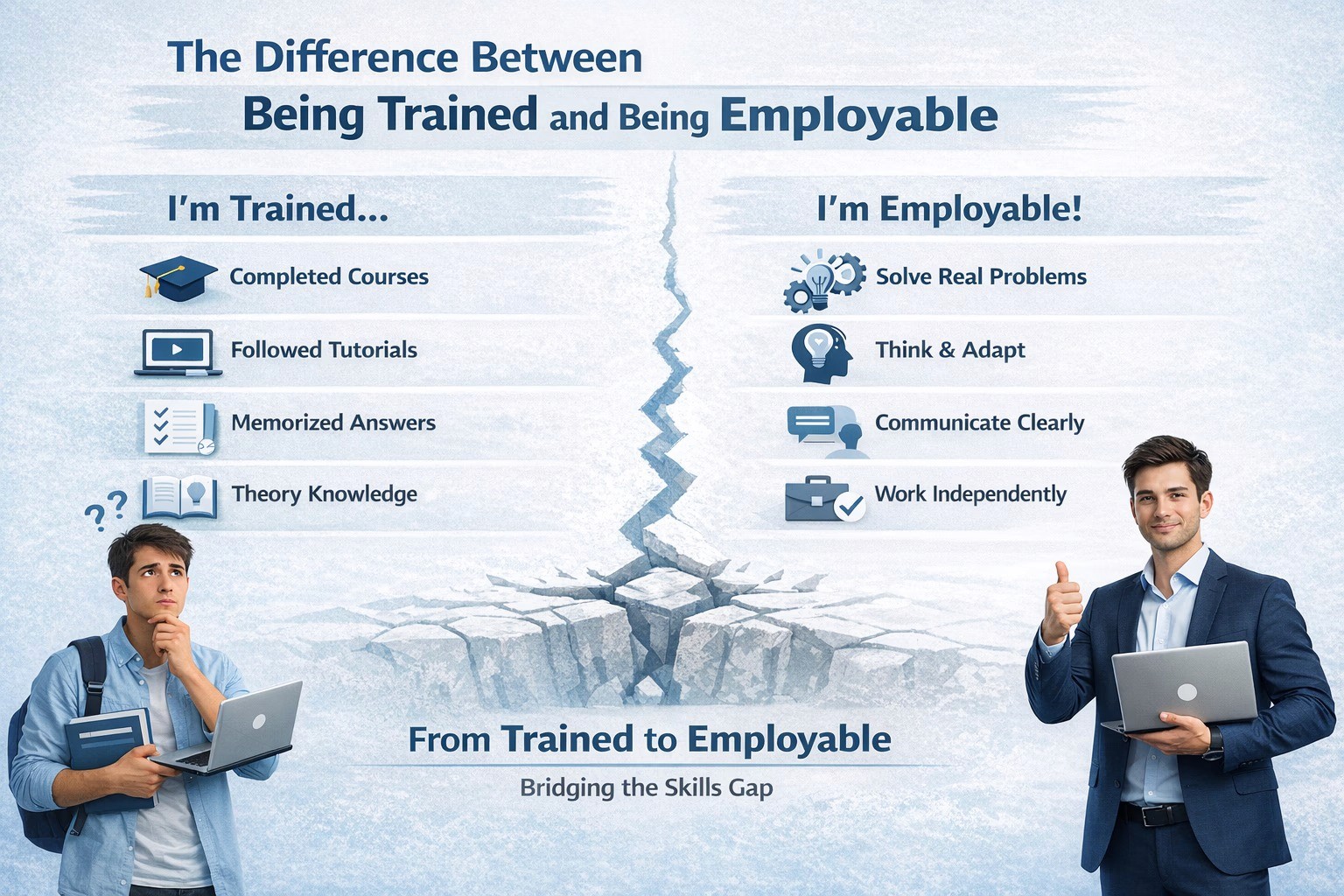
Many IT freshers confidently say, “I’m trained.”
Yet interviews still don’t convert into offers. This leads to confusion:
If I’m trained, why am I not getting hired?
The answer lies in a gap most freshers discover late—the difference between training and employability.
What Being “Trained” Really Means
Being trained usually means:
you completed courses or certifications
you know concepts theoretically
you followed tutorials or guided labs
you can recognise answers when you see them

Training builds knowledge exposure. It is an important first step—but it is not the final one.
What Being “Employable” Means
Being employable means a company feels confident that:
you can apply skills without step-by-step guidance
you can explain your thinking clearly
you can handle unfamiliar problems calmly
you can learn on the job without constant supervision
Employability is about trust and readiness, not just knowledge.
Why Training Alone Is Not Enough
Most fresher training is structured and predictable. Real interviews and jobs are not.
Interviewers test:
how you reason when the question changes
how you explain a solution
how you react when you don’t know something
whether your project work is real or memorised
A trained candidate may know answers.
An employable candidate can work through uncertainty.
The Signals Interviewers Look For
When skills are similar, interviewers choose candidates who show:
clear communication
logical, step-by-step thinking
ownership of projects
learning mindset instead of panic
This is why two equally trained freshers can get very different results.
How Freshers Can Move From Trained to Employable
To become employable, training must turn into proof:
Projects: one complete project you can explain end-to-end
Problem-solving: solve questions without hints and explain your steps
Communication: practise speaking your approach out loud
Ownership: talk about what went wrong and how you fixed it
Learning ability: show how you pick up new tools or concepts
This transition is exactly where many placement-focused programs, like those at VibrantMinds Technologies Pvt Ltd, focus—bridging classroom learning with real hiring expectations.
Join WhatsApp Groups for Updates
Group 1: CLICK HERE> https://chat.whatsapp.com/KAXuSLpag96DcdMDsphFrO
📢 Don’t forget to forward this message to your friends and help them kick-start their careers