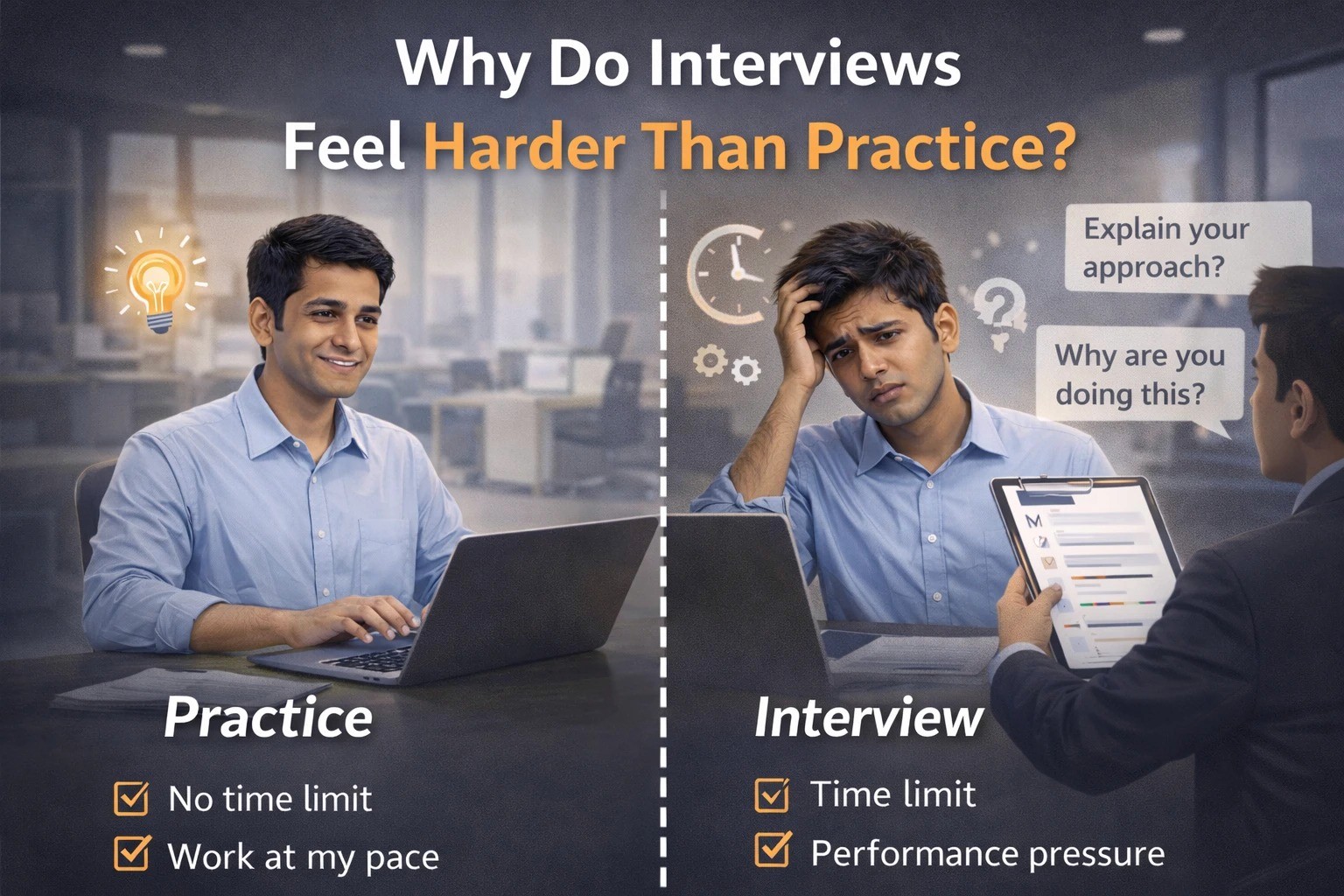
Why Do Interviews Feel Harder Than Practice?
Almost every IT fresher in India says this at some point:
“I practice regularly, but interviews feel much harder than my preparation.”
This feeling is extremely common, and it does not mean you are weak or unprepared. Interviews feel harder because interviews test more than just knowledge. They test thinking, communication, confidence, and performance under pressure—all at once.
Let’s break down why this happens and what freshers can do about it.
Practice feels safe. Interviews don’t.
When you practice at home, there is no pressure. You can take your time, retry mistakes, and even look things up. In interviews, you must think and respond immediately while someone is watching. This sudden pressure alone makes even easy questions feel difficult.
Interviews test thinking, not memory.
During practice, you often solve familiar problems or repeat patterns you have already seen. Interviews usually change the question slightly. The interviewer wants to see how you think, not whether you remember an answer. That shift makes interviews feel harder.
Explaining while thinking is new for most freshers.
At home, you think silently. In interviews, you must think and speak at the same time. You are expected to explain your approach, answer “why” questions, and adjust when the interviewer interrupts. This skill needs practice, and most freshers haven’t trained for it.
Time pressure affects your brain.
When time is limited, your mind works differently. You may rush, doubt yourself, or forget things you know well. This is normal. It happens because stress blocks clear thinking—not because you lack knowledge.
Fear of judgement makes mistakes feel bigger.
In practice, mistakes don’t matter. In interviews, you feel every mistake could cost the job. This fear increases anxiety and reduces clarity. Many freshers perform worse because they are trying too hard to be perfect.
Interviews test communication, not just technical skill.
You might know the correct answer, but if you explain it poorly, it sounds incomplete. Interviewers check how clearly you express ideas, not just what you know. This is why interviews feel tougher than coding or studying alone.
Most freshers don’t practice in interview-like conditions.
Many prepare by solving questions silently, watching videos, or reading solutions. They skip mock interviews and timed practice. So when a real interview happens, it feels overwhelming—not because it is impossible, but because it is unfamiliar.
How to make interviews feel closer to practice
• Practice explaining out loud
Solve problems while speaking your thoughts clearly.
• Do timed practice regularly
Simulate interview time limits to train your brain.
• Expect not knowing everything
Interviewers value calm reasoning more than instant answers.
• Treat interviews as skill-building, not judgement
Each interview improves the next one.
• Do mock interviews
They reduce fear because your brain gets used to the format.
Final takeaway
Interviews feel harder than practice because they combine knowledge, pressure, explanation, and confidence—all at once. This struggle is normal for freshers. It does not mean you are behind. It means you are transitioning from learning to performing.
With consistent practice that includes explanation, timing, and mock interviews—like the structured approach followed at VibrantMinds Technologies Pvt Ltd—interviews gradually start to feel more familiar and manageable.
Struggling in interviews is not failure.
It is part of becoming job-ready.