Why Freshers Who Say Yes to Everything Struggle Later in IT Careers
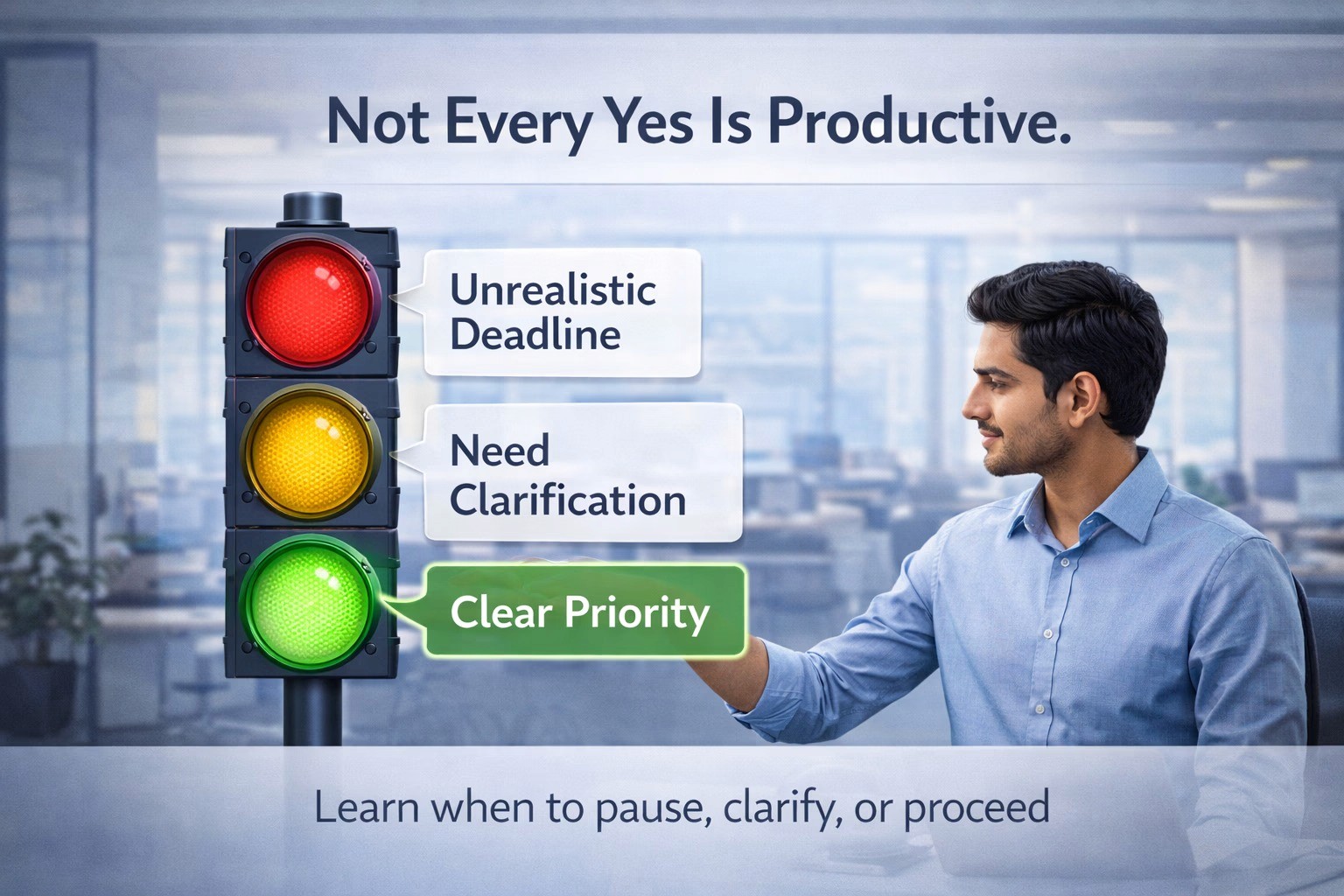
In the first months of an IT job, many freshers believe one thing: “If I say yes to everything, I will look sincere and secure my place.” This is common in Indian service companies and product teams—because freshers want to be seen as hardworking and “low risk.”
But over time, always saying yes can backfire. It doesn’t just increase workload. It can reduce quality, create delays, and slowly damage trust.
1) Saying yes creates role overload (and performance drops)
When you accept tasks beyond your realistic capacity, you enter role overload—too many demands with limited time and energy. Research shows role overload can act as a hindrance stressor that increases psychological strain and ultimately hurts work performance.

In real teams, this looks like:
missing edge cases
incomplete testing
rushed fixes that create rework
late updates because you’re juggling too much
So even if your intention is good, output becomes inconsistent.
2) It increases burnout risk and reduces professional effectiveness
The World Health Organization describes burnout as an occupational phenomenon linked to chronic workplace stress that has not been successfully managed, and includes exhaustion and reduced professional efficacy.
When freshers keep saying yes:
work hours stretch silently
energy drops
learning slows
motivation becomes survival-mode
The result is not growth. It’s fatigue and frustration.
3) Managers don’t reward “busy”; they reward “reliable”
Managers are measured on delivery. So they value people who:
commit realistically
communicate early
deliver stable output
If you say yes to everything and later miss deadlines or quality, managers don’t remember the “yes.” They remember the surprise delay and the rework.
4) You lose the skill that matters most: prioritization
Early career growth in IT depends heavily on prioritization—knowing what is urgent, what is important, and what can wait. If you accept everything, you never learn to negotiate scope or ask for priorities. Over time, you get stuck as the person who “takes tasks” but doesn’t “drive outcomes.”
5) In Indian workplaces, “yes” is often misunderstood as “I can deliver”
In many Indian teams, communication is indirect. A manager may interpret your “yes” as a promise, not as willingness. If you later say “I couldn’t complete,” it looks like lack of ownership—even when the real issue was overload.
What to do instead (without sounding rude)
Use the “Yes, and…” method
Instead of a direct no, respond with clarity:
“Yes, I can take this. Which one should I deprioritize?”
“Yes, I can do the only essentials quickly by tomorrow. Otherwise, I can deliver by Friday.”
“Yes, I’ll start. One blocker: I need access/requirements first.”
This shows cooperation and maturity.
Share your capacity early (simple status format)
Use this quick line in chat/standups:
Current tasks: A, B
ETA: A by today, B by tomorrow
If new task is urgent: confirm what to pause
(Honest updates build trust faster than silent struggle.)
The fresher-friendly rule
Say yes to learning. Don’t say yes to impossible timelines.
When you communicate capacity, ask for priorities, and deliver consistently, managers see you as dependable—and you actually grow faster. At VibrantMinds Technologies Pvt Ltd, we train freshers on real workplace skills like task prioritization, professional communication, and manager-ready updates—so you don’t just get hired, you also perform confidently after joining.
Join WhatsApp Groups for Updates
Group 1: CLICK HERE> https://chat.whatsapp.com/KAXuSLpag96DcdMDsphFrO
📢 Don’t forget to forward this message to your friends and help them kick-start their careers