Why Overplanning Delays Fresher Growth (And What to Do Instead)
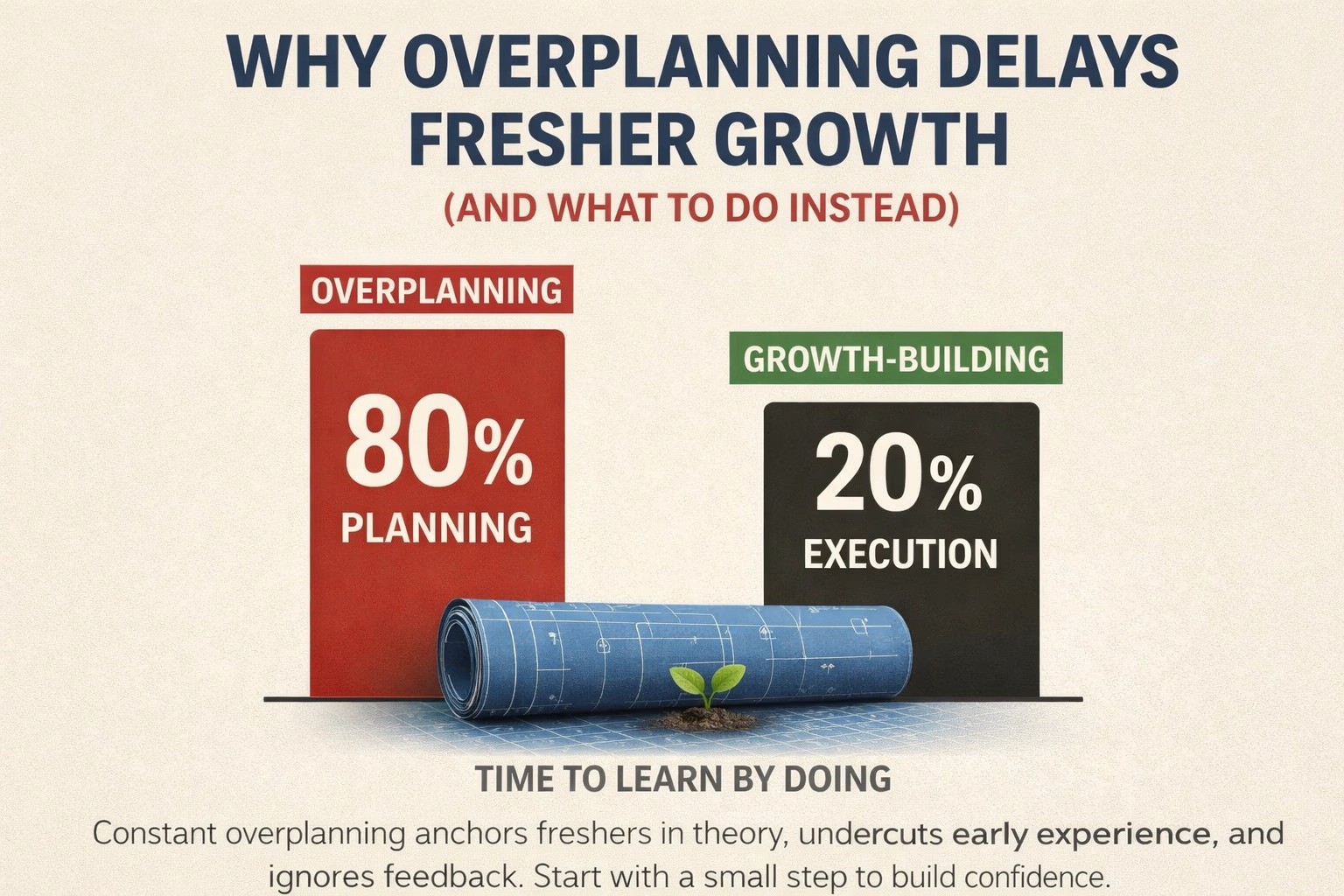
For many IT freshers, the career journey begins with excitement and pressure at the same time. There is pressure to choose the right programming language, the right certification, the right project, the right role, and even the right long-term plan. On the surface, this seems smart. Planning feels safe. It feels responsible.
But in reality, overplanning is one of the most common reasons freshers delay their own growth.
This happens more often than students realize. A fresher spends weeks comparing Java vs Python, testing vs development, cloud vs data analytics, online courses vs certifications, and internship vs direct job preparation. Months pass. Notes get longer. Lists get bigger. Confidence becomes smaller.
Meanwhile, another fresher starts with one skill, builds one project, practices interviews, makes mistakes, improves, and moves ahead.
That is the difference.
In the IT industry, growth does not come only from planning. It comes from doing.
Understanding Overplanning in an IT Fresher’s Career

Overplanning means spending too much time preparing to start instead of actually starting.
It often looks like this:
Constantly researching career paths without choosing one
Watching endless videos on IT jobs but not practicing skills
Creating study timetables again and again
Waiting for the “perfect” course or “best” roadmap
Delaying projects until everything feels clear
The truth is simple. In the real IT job market, clarity often comes after action, not before it.
Freshers usually think they need a full 2-year career plan before taking the first step. But most successful professionals did not begin with perfect clarity. They learned by building, applying, failing, improving, and repeating.
Why Overplanning Delays Career Growth
1. It creates fake productivity
Planning gives the feeling of progress. Making spreadsheets, course lists, certification plans, and study calendars feels productive. But unless those plans turn into skills, projects, and job readiness, they do not create results.
In IT hiring, recruiters do not select candidates because they had a beautiful plan. They select candidates who can show practical ability.
That means:
coding practice
testing knowledge
debugging ability
communication skills
project understanding
problem-solving mindset
A plan only has value when it is actually put into practice.
2. It increases fear of making the wrong choice
Many engineering graduates delay progress because they fear choosing the wrong path. They worry:
“What if I choose software testing and later regret it?”
“What if I learn Java but companies want Python?”
“What if I invest time in one direction and miss a more rewarding option?”
This is normal, especially in the Indian campus hiring ecosystem where students see many career options at once.
But the bigger mistake is not choosing.
The IT industry rewards adaptable learners. A fresher can start in testing, support, development, cloud operations, or data-related work and still grow strongly later. What matters most in the beginning is building discipline, technical confidence, and real exposure.
3. It delays practical learning
You do not truly understand IT work just by reading about it. You understand it by doing small but real tasks.
For example:
writing test cases teaches more than only reading about software testing
building a mini project teaches more than endlessly watching tutorials
fixing bugs teaches more than memorizing interview answers
working on structured assignments teaches more than random theory notes
This is why skill-based hiring is becoming more important. Companies increasingly value candidates who can demonstrate practical learning.
4. It reduces confidence over time
The longer freshers wait, the more they begin to doubt themselves. They compare their progress with others. They feel left behind. Even simple tasks start feeling difficult because they have built too much pressure around getting everything right.
Action reduces fear. Delay increases fear.
That is why students who begin early, even imperfectly, often become more confident than students who plan endlessly.
What Fresher Growth Actually Looks Like in the IT Industry
Career growth in IT is rarely a straight line.
A fresher may begin with one role, discover strengths during training, improve through projects, gain confidence in interviews, and then move into a better opportunity. Growth happens through momentum.
In real work environments, companies expect freshers to learn on the job, adapt to tools, communicate with teams, understand tasks, and improve with feedback. No company expects a fresher to know everything from day one.
What they do expect is this:
willingness to learn
consistency
practical effort
problem-solving attitude
readiness to work in structured environments
That means your early goal should not be “perfect planning.”
Your goal should be “steady career movement.”
What to Do Instead of Overplanning
Start with one direction, not ten
Pick one job path based on your current interest and market demand. It can be software development, software testing, data analytics, cloud basics, or support roles. Do not keep switching every week.
A direction gives focus. It does not lock your future.
Create a focused execution plan
Instead of making a long career plan for years, make a short execution plan.
For example:
learn core basics of one skill
practice hands-on tasks daily
build one mini project
prepare common interview questions
improve communication and presentation
Short action plans are easier to follow and more effective than complex long-term plans that are never executed.
Learn through projects
Projects create proof of learning. Even simple projects help freshers understand workflow, logic, debugging, testing, and documentation.
For IT freshers, project-based learning is one of the best ways to become job-ready because it connects theory to real industry expectations.
Accept imperfect progress
Your first project may be basic.
Your first mock interview may go badly.
Your first resume may need improvement.
That is normal.
The fresher who improves from imperfect action grows faster than the fresher who waits for perfect preparation.
Follow structured learning, not random content
One major reason students overplan is because they consume too much scattered advice online. One video says to learn Java, another says learn AI, third says skip certifications and a fourth says focus only on aptitude.
This creates confusion.
Structured learning matters because it removes guesswork. A proper roadmap, guided practice, real projects, and industry-oriented training help freshers move forward with clarity.
A Better Career Formula for Freshers
A simple formula works better than overthinking:
Choose one path → learn basics → practice regularly → build projects → prepare for interviews → improve from feedback
This is how many successful IT careers begin.
Not with perfect planning.
But with consistent execution.
Conclusion
Overplanning feels safe, but it often becomes a hidden barrier to fresher growth. In the IT industry, progress comes from practical learning, action, and steady improvement. Freshers do not need to know everything before they begin. They need to begin, learn from the process, and keep moving.
If you are an engineering graduate, IT fresher, or internship aspirant, remember this: your career will grow faster when you stop waiting for the perfect roadmap and start building real skills.
That is where confidence comes from. That is where opportunities come from. And that is how long-term success begins.
For students who want more industry-oriented guidance, practical projects, and structured learning support, platforms like VibrantMinds Technologies can help bridge the gap between classroom learning and actual IT job readiness.
Join WhatsApp Groups for Updates
Group 1: CLICK HERE> https://chat.whatsapp.com/KAXuSLpag96DcdMDsphFrO
📢 Don’t forget to forward this message to your friends and help them kick-start their careers