Why Placement-Oriented Training Focuses on Outcomes, Not Syllabus
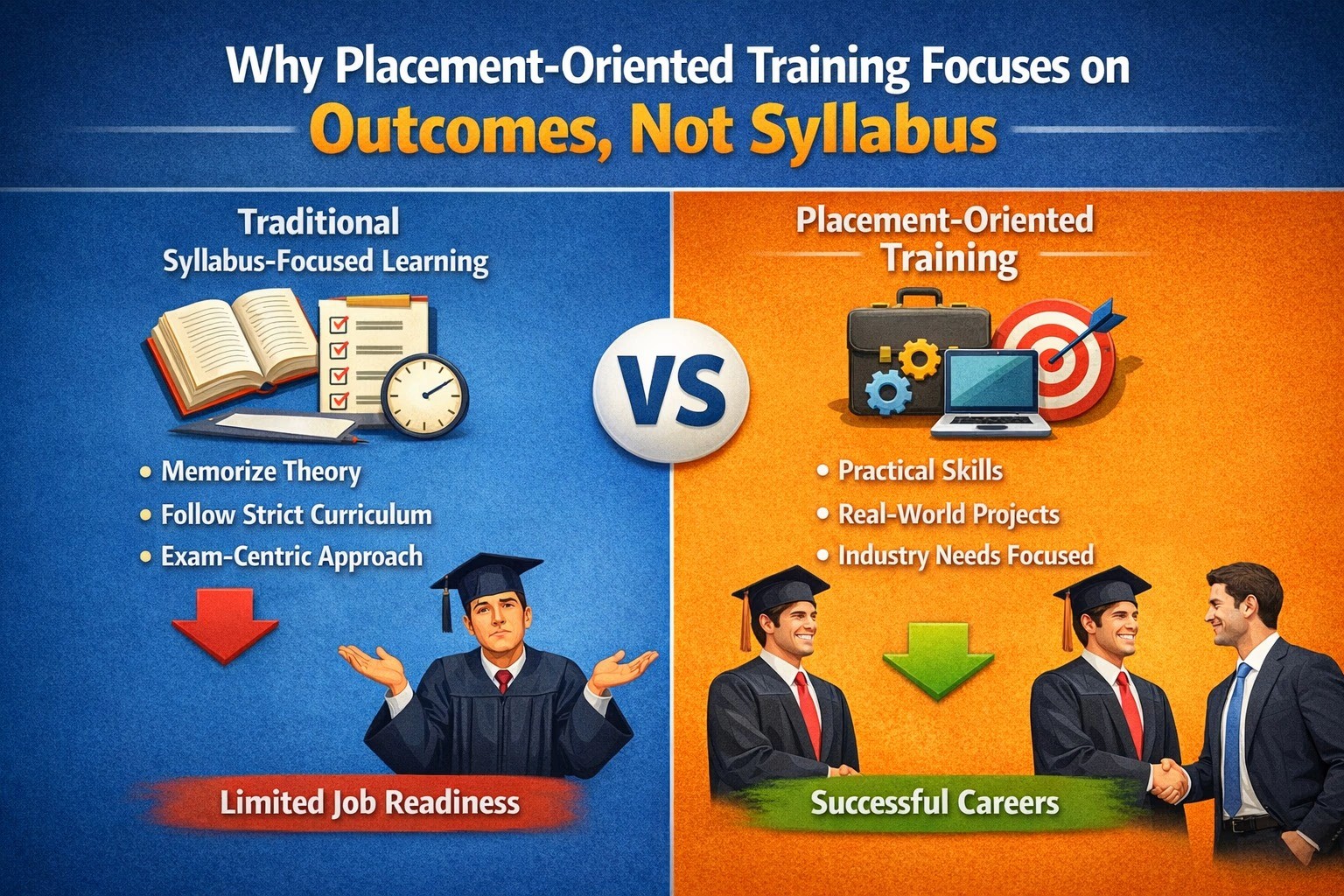
Why Placement-Oriented Training Focuses on Outcomes, Not SyllabusIn the Indian IT job market, hiring has changed significantly over the last decade. Earlier, completing a syllabus or earning a degree was often enough to qualify for entry-level roles. Today, companies receive thousands of applications for the same fresher position. To manage this scale, recruiters rely more on skill tests, projects, and interviews that measure real ability.
This shift explains why placement-oriented training programs do not revolve around finishing a syllabus. Instead, they focus on outcomes—what a fresher can actually do by the end of training and how well they perform in hiring stages.
What “outcomes” really mean in placement-oriented training
Outcomes are measurable results, not chapters covered. In a placement-focused context, outcomes answer questions such as:
Can the fresher clear aptitude and skill tests?
Can they write basic working code or test cases?
Can they explain a project clearly in interviews?
Can they handle entry-level responsibilities on a real project?
A syllabus lists topics. Outcomes show employability.
Why syllabus-driven learning falls short for freshers
Traditional syllabus-based learning is designed for academics, not hiring. It often:
Covers many topics without depth
Prioritizes theory over application
Ends with exams that test memory, not workplace skills
In interviews, recruiters do not ask whether you completed “Module 4.” They ask you to solve a problem, debug an issue, or explain a project. A syllabus does not guarantee readiness for these tasks.
Why companies care about outcomes more than coverage
Recruiters evaluate freshers based on risk and readiness. Outcomes reduce risk.
From a hiring perspective:
A candidate who has built and explained a project is easier to trust
Someone who has cleared mock skill tests is more likely to clear real ones
A fresher who can communicate their work clearly is easier to onboard
This is why hiring processes are structured around resume screening → skill test → interview → offer. Training that mirrors these steps produces better results.
How placement-oriented training is structured differently
Placement-focused programs reverse the traditional approach.

Instead of:
“Finish Java → then start projects → then think about interviews”
They follow:
“Understand hiring needs → build skills → practice tests → prepare interviews”
Key characteristics include:
• Job-role alignment
Training is tailored to roles such as developer, QA, data analyst, or cloud support—not generic IT theory.
• Project-first learning
Concepts are taught only to the extent needed to build and explain real projects. This ensures relevance.
• Continuous assessment
Regular mock tests, coding exercises, and interview simulations replace end-term exams.
• Communication and explanation practice
Freshers are trained to explain logic, decisions, and trade-offs—skills that interviews actively test.
What outcomes placement-oriented training aims for
By the end of training, a fresher should be able to:
Clear basic aptitude and technical skill tests confidently
Build 1–2 job-relevant projects and explain them end-to-end
Handle common interview questions with clarity
Understand workplace expectations (deadlines, teamwork, ownership)
These outcomes directly map to hiring success, especially in Indian service and product companies.
Why this approach benefits freshers
For freshers, outcome-based training offers:
Faster readiness for placements
Less confusion about “what to study next”
Practical confidence instead of syllabus anxiety
Clear feedback on strengths and gaps
Instead of waiting to “finish everything,” freshers progress step by step toward employability.
Final takeaway
Placement-oriented training focuses on outcomes because companies hire for skills, not syllabus completion. In a competitive IT job market, what matters is not how much you studied, but what you can demonstrate.
Programs that emphasize projects, skill tests, and interview readiness help freshers transition smoothly from campus to corporate life. This outcome-driven approach is why institutes like VibrantMinds Technologies Pvt Ltd, which combine project-based learning with placement support, are better aligned with real hiring expectations in India.
Finish outcomes—not just chapters—and placements follow.
Join WhatsApp Groups for Updates
Group 1: CLICK HERE> https://chat.whatsapp.com/KAXuSLpag96DcdMDsphFrO
📢 Don’t forget to forward this message to your friends and help them kick-start their careers